














Breaking Ground: Exploring the Latest Innovations in Semiconductor Materials
Semiconductor materials are the backbone of modern electronics, powering the devices that drive our interconnected world. In recent years, significant advancements have been made in semiconductor material science, leading to the development of novel materials with enhanced properties and performance characteristics. From silicon alternatives to two-dimensional materials and beyond, the latest innovations in semiconductor materials are reshaping the landscape of device design and manufacturing, offering new possibilities for improved performance, efficiency, and functionality. In this comprehensive exploration, we delve into the cutting-edge innovations in semiconductor materials and their profound impact on device performance.
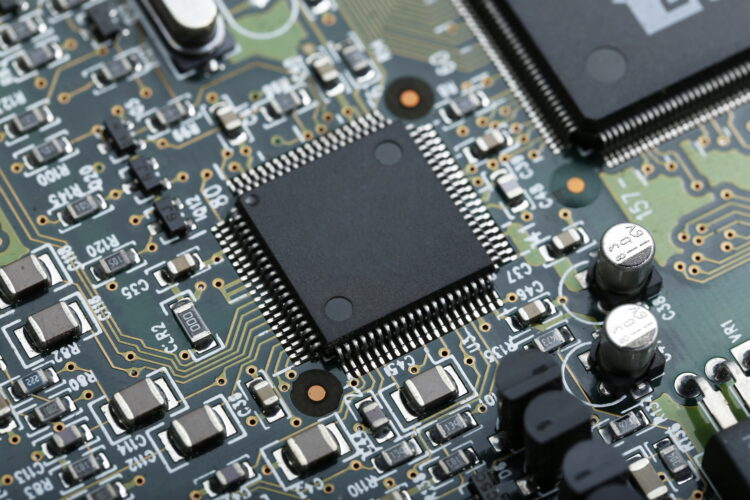
- Beyond Silicon: Exploring Alternative Semiconductor Materials
While silicon has long been the dominant material in semiconductor manufacturing, researchers and engineers are increasingly turning to alternative materials to overcome the limitations of traditional silicon-based devices. These alternative materials offer unique properties and performance advantages that make them well-suited for a wide range of applications, from high-speed electronics to energy-efficient devices.
III-V Compound Semiconductors: III-V compound semiconductors, such as gallium arsenide (GaAs), gallium nitride (GaN), and indium phosphide (InP), offer superior electron mobility and higher breakdown voltages compared to silicon, making them ideal for high-frequency and high-power applications. III-V materials are commonly used in radio frequency (RF) amplifiers, power electronics, and optoelectronic devices, where speed and efficiency are paramount.
2D Materials: Two-dimensional (2D) materials, such as graphene, transition metal dichalcogenides (TMDs), and black phosphorus, have emerged as promising candidates for next-generation semiconductor devices. These atomically thin materials exhibit unique electronic properties, including high carrier mobility, excellent thermal conductivity, and mechanical flexibility, making them attractive for applications in flexible electronics, sensors, and photovoltaics.
Organic Semiconductors: Organic semiconductors, based on carbon-based molecules and polymers, offer advantages such as low-cost fabrication, mechanical flexibility, and compatibility with large-area processing techniques. Organic semiconductors are used in organic light-emitting diodes (OLEDs), organic photovoltaics (OPVs), and organic field-effect transistors (OFETs), enabling the development of lightweight, flexible, and energy-efficient electronic devices.
- Enhancing Performance: Novel Semiconductor Material Properties
In addition to offering alternatives to traditional silicon-based devices, the latest innovations in semiconductor materials are focused on enhancing device performance through the manipulation of material properties at the nanoscale. These advanced materials exhibit unique electronic, optical, and thermal properties that enable the development of high-performance devices with improved efficiency and functionality.
Wide Bandgap Semiconductors: Wide bandgap materials, such as silicon carbide (SiC) and gallium nitride (GaN), have higher breakdown voltages and electron saturation velocities than silicon, allowing for the development of power devices with reduced switching losses and higher operating temperatures. Wide bandgap semiconductors are used in power electronics, electric vehicles, and renewable energy systems, where efficiency and reliability are critical.
Quantum Dots: Quantum dots are nanoscale semiconductor particles with unique optical properties, including size-tunable emission spectra and high photoluminescence quantum yields. Quantum dots are used in display technologies, lighting applications, and biomedical imaging, where their narrow emission linewidths and high color purity enable vibrant colors and efficient light emission.
Perovskite Semiconductors: Perovskite materials, with their exceptional optoelectronic properties and ease of fabrication, have attracted significant attention for applications in solar cells, light-emitting diodes (LEDs), and photodetectors. Perovskite solar cells, in particular, have achieved remarkable efficiency improvements in recent years, rivaling traditional silicon-based solar cells and offering the potential for low-cost, high-efficiency photovoltaic technology.
- Enabling Emerging Technologies: Semiconductor Materials for the Future
The latest innovations in semiconductor materials are driving advancements in emerging technologies such as quantum computing, neuromorphic computing, and advanced sensing systems. These materials provide the foundation for next-generation devices and systems that promise to revolutionize industries, transform economies, and address some of the most pressing challenges facing society.
Topological Insulators: Topological insulators are materials that exhibit unique electronic properties, including protected surface states and spin-momentum locking, which make them attractive for applications in quantum computing, spintronics, and topological photonics. These materials have the potential to enable the development of robust and scalable quantum computing platforms, revolutionizing information processing and cryptography.
Spintronics Materials: Spintronics, or spin-based electronics, relies on the manipulation of electron spin to store and process information, offering advantages such as non-volatility, low power consumption, and high-speed operation. Spintronic materials, such as magnetic semiconductors and topological insulators, are paving the way for spin-based memory devices, magnetic sensors, and spin logic gates, which hold promise for future computing architectures and data storage technologies.
Conclusion: Shaping the Future of Electronics with Innovative Semiconductor Materials

In conclusion, the latest innovations in semiconductor materials are driving a wave of technological advancements that promise to reshape the future of electronics and information technology. From alternative semiconductor materials to nanoscale structures and beyond, these materials offer unprecedented opportunities for improving device performance, enabling new functionalities, and addressing emerging challenges in a wide range of applications. As researchers and engineers continue to push the boundaries of material science and semiconductor technology, the potential for innovation and growth in the semiconductor industry is boundless, paving the way for a future defined by smarter, faster, and more efficient electronic devices that enhance our lives and empower the digital transformation of society.
Previous Article

Written by
Ajay Kuriakose Jacobs
Semiconductor Device Fabrication
March 26, 2024
© Copyright 2026 Ajay Kuriakose Jacobs All Rights Reserved.
Archive
Frequently Read Topics


