



















Navigating the Terrain of Semiconductor Device Scaling: Challenges and Opportunities
Navigating the Terrain of Semiconductor Device Scaling: Challenges and Opportunities
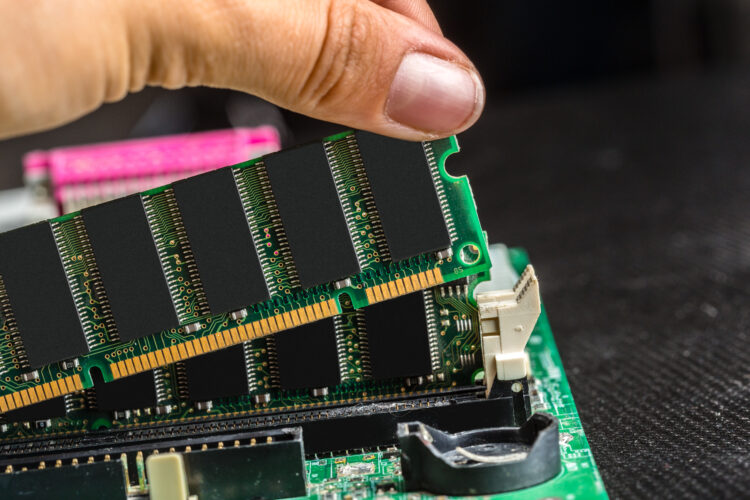
Semiconductor device scaling, the relentless pursuit of packing more transistors into smaller spaces, has been the driving force behind the exponential growth of computing power over the past few decades. From the early days of Moore’s Law to the present era of nanotechnology, the semiconductor industry has continuously pushed the boundaries of what’s possible, enabling the development of powerful computers, smartphones, and countless other electronic devices. However, as semiconductor nodes approach the atomic scale, the journey towards ever smaller devices is fraught with challenges and opportunities that demand innovative solutions and strategic foresight.
The Promise and Perils of Scaling:
At the heart of semiconductor device scaling lies the promise of increased performance, reduced power consumption, and enhanced functionality. Shrinking transistor sizes enable faster switching speeds and higher transistor densities, leading to improved computational capabilities and energy efficiency. This scalability has fueled the digital revolution, driving innovations in fields ranging from artificial intelligence to personalized medicine.
However, the path to smaller devices is not without its perils. As transistors shrink, they become more susceptible to various physical and electrical phenomena that can degrade their performance and reliability. Issues such as leakage currents, variability, and quantum effects become increasingly pronounced at smaller scales, posing significant challenges to designers and manufacturers alike.
Challenges of Semiconductor Device Scaling:
One of the most pressing challenges of semiconductor device scaling is the phenomenon of leakage currents. As transistor dimensions shrink, the thinning of insulating layers and the increasing proximity of conductive elements lead to higher leakage currents, resulting in increased power consumption and heat generation. Mitigating leakage currents requires innovative design techniques and materials engineering to maintain adequate insulation while preserving device performance.
Variability is another critical challenge associated with scaling semiconductor devices. At smaller scales, variations in manufacturing processes, material properties, and environmental conditions can lead to significant fluctuations in transistor characteristics. This variability poses a major obstacle to achieving reliable device performance and complicates the task of designing robust circuits that can tolerate a wide range of operating conditions.
Furthermore, as semiconductor nodes approach the atomic scale, quantum mechanical effects become increasingly significant. Quantum tunneling, for example, can cause electrons to pass through insulating barriers, leading to unexpected device behavior and reliability issues. Overcoming these quantum effects requires novel device architectures and fabrication techniques that take into account the inherent probabilistic nature of quantum mechanics.
Opportunities in Semiconductor Device Scaling:
Despite these challenges, semiconductor device scaling presents numerous opportunities for innovation and advancement. One of the most promising opportunities lies in the development of new materials and device architectures that can circumvent the limitations of traditional silicon-based technologies. Emerging materials such as graphene, carbon nanotubes, and two-dimensional semiconductors offer unique properties that could enable the fabrication of ultra-small, high-performance devices with enhanced functionality.
Moreover, scaling semiconductor devices opens up new avenues for integration and system-level optimization. By packing more transistors into smaller spaces, designers can create highly integrated circuits that combine diverse functionalities on a single chip. This integration enables the development of complex systems-on-chip (SoCs) that can perform a wide range of tasks with unprecedented efficiency and flexibility.
Another opportunity presented by semiconductor device scaling is the exploration of novel computing paradigms beyond the traditional von Neumann architecture. As transistor sizes shrink and power densities increase, researchers are investigating alternative computing models such as neuromorphic computing, quantum computing, and bio-inspired computing. These unconventional approaches to computing promise to revolutionize the way we process and analyze information, opening up new possibilities for solving complex problems in fields such as artificial intelligence, drug discovery, and climate modeling.
Conclusion:
In conclusion, semiconductor device scaling represents both a daunting challenge and a tantalizing opportunity for the semiconductor industry. As transistor sizes continue to shrink towards the atomic scale, engineers and researchers must confront a host of technical hurdles related to leakage currents, variability, and quantum effects. However, by embracing innovation and creativity, the industry can overcome these challenges and unlock the full potential of scaling semiconductor devices.
Moreover, semiconductor device scaling offers numerous opportunities for advancing the state-of-the-art in computing, enabling the development of faster, more energy-efficient, and highly integrated electronic devices. By harnessing the power of new materials, novel architectures, and unconventional computing paradigms, we can usher in a new era of technological innovation that will shape the future of electronics for generations to come.

Written by
Ajay Kuriakose Jacobs
Semiconductor Device Fabrication
July 22, 2024
© Copyright 2025 Ajay Kuriakose Jacobs All Rights Reserved.
Archive
Frequently Read Topics


Subscribe to our Blogs
Feel better, get smarter, and LOL a little… every week.
Most Popular in Travel
-
 Ducks and Geese Farming
Beginner’s Guide to Duck and Geese Farming
-
 Dairy Farming
Introduction to Indian Cow Breeds: A Comprehensive Guide
-


